“The secret to beautiful skin is not complexity — it is consistency with the right gentle steps, repeated every single day.”
Introduction
Why a Simple Routine Works Better Than a Complicated One
Walking into a skincare aisle for the first time can feel like reading a foreign language. Acids, retinoids, peptides, ceramides, niacinamide — the ingredient lists are endless, and the beauty industry profits from making you believe you need all of it at once.
The truth that dermatologists quietly agree on? A simple, consistent five-to-eight step routine using gentle, well-formulated products will outperform a chaotic twenty-step routine every single time. When you layer too many actives too soon, you disrupt your skin barrier, cause irritation, and end up with skin that looks worse than when you started.
The Golden Rules for Beginners
- Start with the basics — cleanser, moisturiser, and SPF — for at least four weeks before adding anything new
- Introduce one new product at a time so you can identify what your skin loves and what it doesn’t
- Gentle does not mean ineffective — the best beginner routine is the one your skin can tolerate daily
- Consistency over the course of months matters more than any single product you choose
- Your skin changes with seasons, hormones, and age — stay curious and keep listening to it
Morning & Evening
Gentle Cleanser — The Foundation of Every Routine
Cleansing is not just about removing makeup — it removes the invisible layer of pollution, dead skin cells, and excess oil that accumulates on your face throughout the day and night. But how you cleanse matters enormously. Harsh, foaming cleansers with sulphates strip your skin’s natural oils and weaken the moisture barrier, leaving skin tight, dry, and vulnerable to breakouts and sensitivity.
For beginners, a low-pH gel or cream cleanser is ideal. Low pH cleansers (around pH 4.5–5.5) match your skin’s natural acidity, which means they clean effectively without causing disruption. Use lukewarm — never hot — water, and spend a full sixty seconds massaging the cleanser into your face with your fingertips before rinsing. Pat dry with a clean cloth; never rub.
COSRX Low pH Good Morning Gel Cleanser
A cult-favourite Korean cleanser formulated at the skin’s ideal pH level with tea tree oil and BHA for daily use without stripping the barrier.
Why beginners love it: Light gel texture, rinses clean, leaves skin feeling balanced — not tight. Works for all skin types, including sensitive and acne-prone.Find it on Amazon
Budget Favourite · Cleanser
Neutrogena Ultra Gentle Daily Cleanser
A fragrance-free, hypoallergenic cleanser so gentle it is recommended by dermatologists for sensitive skin and post-procedure recovery.
Why beginners love it: Available everywhere, affordable, and virtually impossible to resist. A completely safe starting cleanser for anyone.
After Cleansing
Hydrating Toner — The Step Most Beginners Skip (And Shouldn’t)
Modern toners are nothing like the astringent, alcohol-heavy formulas of the past. Today’s hydrating toners — sometimes called essences or first essences — are lightweight water-based formulas that do three important jobs: they restore hydration after cleansing, they prime your skin to better absorb the products that follow, and they begin delivering active ingredients in a form that sinks in fast.
The technique matters too. Rather than swiping toner on with a cotton pad (which absorbs much of the product for no benefit), pour a small amount into clean palms and gently press it into your skin with soft patting motions.
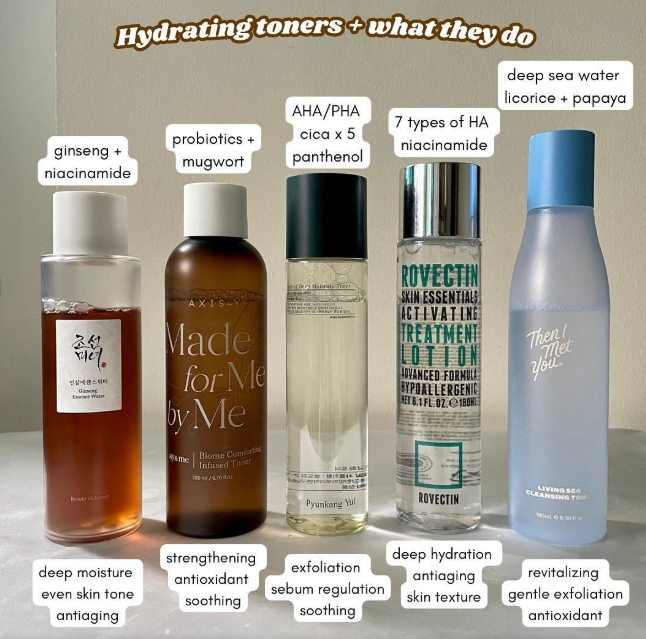
This pressing technique, common in Korean skincare, significantly improves absorption and leaves skin plump rather than damp.
Dermatologist Recommended · Toner
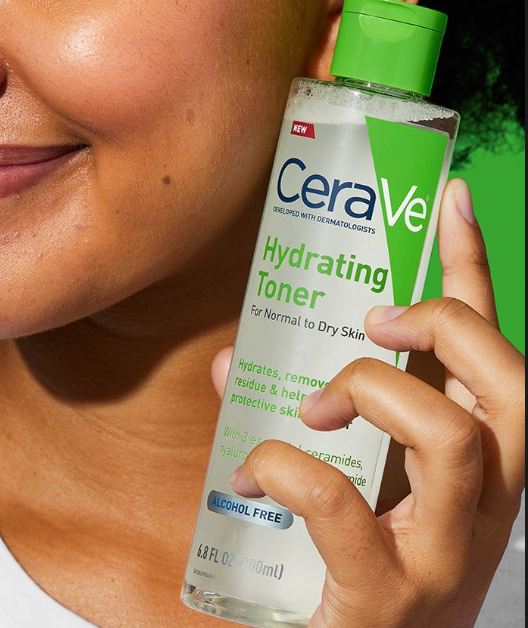
CeraVe Hydrating Toner
Packed with three essential ceramides and hyaluronic acid, this toner replenishes the skin barrier while delivering instant hydration without fragrance or alcohol.
Why beginners love it: CeraVe is trusted by dermatologists worldwide. Simple, non-irritating, and deeply hydrating — the safest possible toner to start with. Find it on Amazon
Toner Tips for Beginners
- Apply toner while your skin is still slightly damp from cleansing — it locks in that extra moisture
- Press, don’t wipe — the pressing technique increases absorption by up to 30% compared to cotton pads
- Layering two thin applications of toner gives better results than one heavy application
- Avoid any toner with alcohol listed in the first five ingredients — these are drying, not hydrating
Targeted Treatment
Face Serum — The Powerhouse Step That Transforms Skin
Serums are concentrated treatment products that target specific skin concerns — brightness, fine lines, dark spots, dehydration, or uneven texture. They contain small molecular weight ingredients that can penetrate deeper into the skin than a moisturiser can, which is why they are applied before heavier products.
For beginners, a Vitamin C serum in the morning and a hyaluronic acid serum in the evening is one of the most universally effective
and well-tolerated combinations. Vitamin C is an antioxidant that brightens the complexion, fades dark spots, and provides protection against environmental damage throughout the day. Hyaluronic acid is a humectant that draws moisture into the skin — perfect for overnight repair.
Morning Use · Vitamin C
TruSkin Vitamin C Serum for Face
A bestselling brightening serum combining Vitamin C, Vitamin E, and hyaluronic acid in a stable formula that visibly improves radiance within two to four weeks.
Why beginners love it: One of the most gentle, well-reviewed Vitamin C serums at an accessible price point. Suitable for sensitive skin and all skin types. Find it on Amazon
Evening Use · Hyaluronic Acid
The Ordinary Hyaluronic Acid 2% + B5
A no-frills serum with multiple weights of hyaluronic acid that attract moisture at every layer of the skin, combined with Vitamin B5 to support the skin barrier.
Why beginners love it: Exceptional value, simple formula, and immediate plumping effect that anyone can see and feel from the very first application. Find it on Amazon
Moisturiser — Locking In Every Layer Beneath


Moisturiser is the step that seals everything you have applied beneath it, trapping active ingredients against the skin and preventing water loss throughout the day and night. It is not about making your skin feel greasy — a good moisturiser appropriate for your skin type should sink in within a minute, leaving skin comfortable, soft, and balanced.
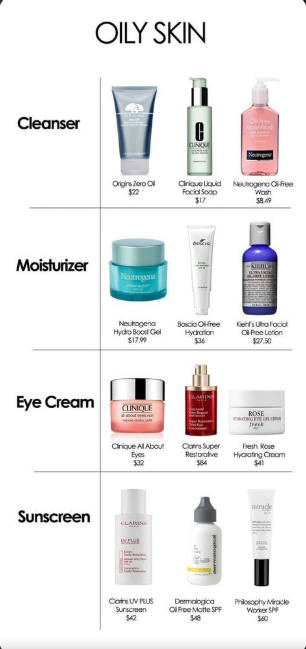
For oily and combination skin, a lightweight gel-cream or water-based formula prevents that heavy feeling without blocking pores. For dry skin, a richer cream with ceramides, shea butter, or squalane provides the longer-lasting moisture barrier you need. You may use the same moisturiser morning and evening, or choose a lighter one for daytime and a richer formula at night.
An oil-free, gel-texture moisturiser with hyaluronic acid that absorbs instantly and provides 48-hour hydration without any heaviness — exceptional for oily and combination skin types.
Why beginners love it: Lightweight enough to wear under makeup, hydrating enough to satisfy dry patches. One of the most universally loved drugstore moisturisers available. Find it on Amazon
Dry Skin · Rich Formula
CeraVe Moisturising Cream
A rich, deeply nourishing cream with three essential ceramides and hyaluronic acid that restores and strengthens the skin barrier — designed for dry to very dry skin.
Why beginners love it: A holy grail moisturiser recommended by dermatologists globally. Non-comedogenic, fragrance-free, and works on face and body. Exceptional value for the tub size. Find it on Amazon
Morning Only — Non-Negotiable
SPF Sunscreen — The One Product Every Dermatologist Agrees On
If there is one non-negotiable product in any skincare routine — beginner or advanced — it is daily broad-spectrum SPF. Sun damage is the number one cause of premature ageing, dark spots, uneven skin tone, and skin cancer. Every other product in your routine, no matter how expensive or sophisticated, works harder and lasts longer when your skin is protected from UV damage.
Apply SPF 30 or higher as the very last step of your morning routine, after moisturiser. Apply it generously — at least a quarter teaspoon for your face alone — and reapply every two hours if you are spending time outdoors. The most common sunscreen mistake is applying too little, which dramatically reduces the stated protection level.
Daily Wear · SPF 50+
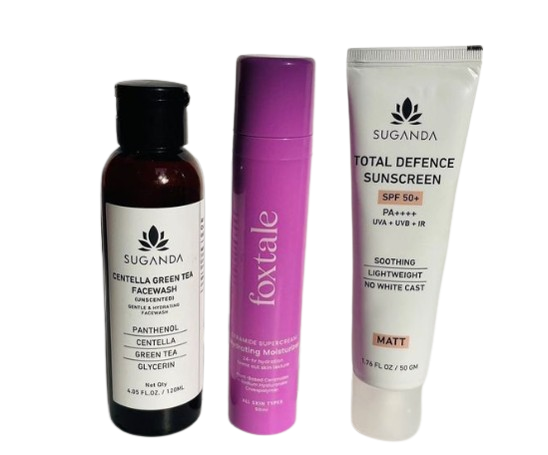
A cult-favourite mineral and chemical hybrid sunscreen that is lightweight, leaves no white cast, and contains niacinamide to calm redness and uneven skin tone simultaneously.
Why beginners love it: No greasy finish, no white cast, and it layers beautifully under makeup. Recommended by dermatologists for acne-prone and sensitive skin types equally. Find it on Amazon
SPF Mistakes That Beginners Make
- Applying too little — the correct amount is roughly a teaspoon for face and neck combined
- Skipping SPF on cloudy days — up to 80% of UV rays penetrate cloud cover and reach your skin
- Relying on SPF in foundation — the coverage is too thin to provide real protection on its own
- Not reapplying after sweating or swimming, even if the label says water-resistant
- Ignoring your neck, ears, and the back of your hands — areas that age just as visibly as your face
Night Only
Evening Routine Adjustments — How Night Care Differs from Morning
Your skin operates differently at night than during the day. In the daytime, it is in protection mode — defending against UV, pollution, and environmental stress.
At night, it switches to repair and regeneration mode, producing new cells and restoring what was damaged. This means your evening routine can and should differ from your morning one.
The evening routine removes the day’s accumulation of sunscreen, makeup, pollution, and dead skin cells. If you wear makeup or SPF — and you should be wearing SPF — a double cleanse is recommended: first an oil-based cleanser or micellar water to dissolve makeup and sunscreen, then your regular gentle cleanser. After that, your toner, serum (hyaluronic acid is perfect at night), and a slightly richer moisturiser than you use in the morning.
Double Cleanse · First Step
Clinique Take The Day Off Cleansing Balm
A melting balm cleanser that dissolves even waterproof makeup and sunscreen in seconds, transforming from a balm to an oil to a milky rinse with the addition of water.
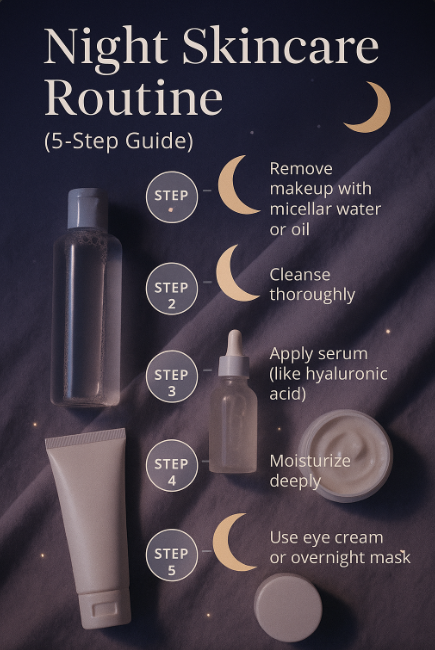
Why beginners love it: Satisfying to use, removes everything effortlessly, and leaves skin soft without stripping. The gold standard of first-cleanse products. Find it on Amazon
1–2 Times Per Week
Weekly Exfoliation — The Refresh Your Skin Actually Needs
Your skin naturally sheds dead cells every 28 to 40 days, but that cycle slows as we age, and dead cells can accumulate on the surface, leaving skin looking dull, congested, and rough in texture. Gentle weekly exfoliation speeds up that natural process and reveals the fresher, brighter skin underneath.
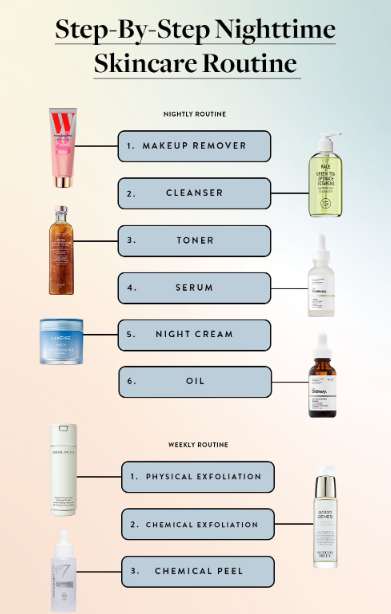
There are two types of exfoliation: physical (scrubs, brushes) and chemical (AHAs and BHAs). For beginners, a gentle chemical exfoliant is almost always better than a physical scrub — the tiny particles in scrubs can cause micro-tears in the skin that lead to long-term damage and sensitivity. A low-percentage lactic acid or mandelic acid product used once or twice a week is ideal for first-timers.
Chemical Exfoliant · Gentle
Paula’s Choice Skin Perfecting 8% AHA Gel
A gentle leave-on glycolic acid exfoliant that smooths skin texture, fades dark spots, and unclogs pores without the harshness of physical scrubs.
Why beginners love it: Leave-on exfoliants are far gentler than rinse-off scrubs. This one delivers visible results within two weeks without redness or peeling when used as directed. Find it on Amazon
Exfoliation Rules for Beginners
- Start with once a week and only increase to twice a week if your skin tolerates it without any redness
- Never exfoliate broken, irritated, or sunburned skin — wait until it is fully healed
- Always follow exfoliation with a rich moisturiser to replenish the barrier
- Apply SPF the morning after exfoliating — freshly exfoliated skin is more sensitive to UV damage
- Do not combine exfoliation with other active ingredients like retinol or strong Vitamin C on the same night
Weekly Treat
Face Mask Treat — Your Weekly Ritual of Care
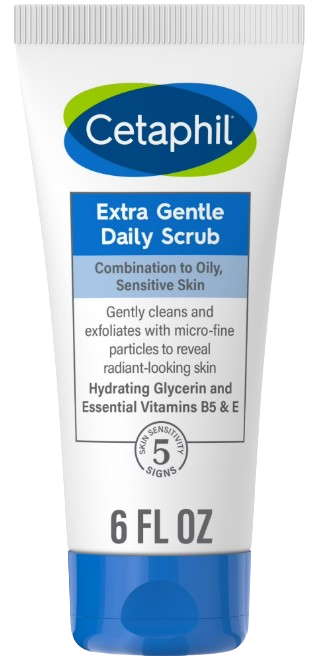
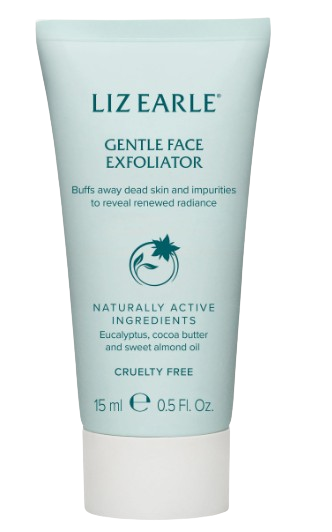
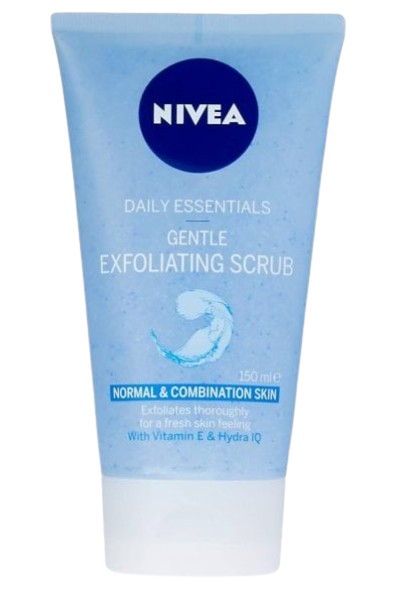
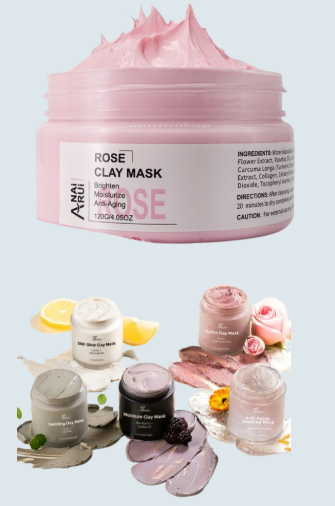
Face masks are not an essential daily step, but they are one of the most enjoyable parts of building a skincare habit — and they deliver concentrated doses of specific ingredients in a format that stays in contact with your skin for longer than a serum or moisturiser. Treat your weekly mask as a ritual of self-care, not just a beauty treatment.
For beginners, two types of masks cover almost every concern. A clay mask (kaolin or bentonite clay) once a week absorbs excess oil, draws out impurities, and visibly minimises the appearance of pores. A hydrating sheet mask or sleeping mask provides an intensive burst of moisture and is perfect for the night before a big event, after travel, or whenever your skin feels particularly depleted.
The world’s most powerful facial mask — 100% pure calcium bentonite clay that deep-cleans pores, removes blackheads, and leaves skin visibly smoother. Mix with apple cider vinegar for oily skin or water for dry skin.
Why beginners love it: One large tub lasts months, it is pure and undiluted, and the results are immediately visible. A true classic that has earned over 100,000 five-star reviews. Find it on Amazon
Deep Hydration · Sleeping Mask
LANEIGE Water Sleeping Mask
A bestselling overnight mask from South Korea that delivers intensive hydration while you sleep through a unique Sleep-tox technology, leaving skin plump and glowing by morning.
Why beginners love it: Apply as the last step of your evening routine on mask nights. Wake up to noticeably softer, more radiant skin with absolutely no effort required. Find it on Amazon
Personalise Your Routine
Building Your Routine Around Your Skin Type
Every routine above works as a foundation, but your skin type determines the specific textures, concentrations, and additional products that will work best for you. Understanding your skin type is one of the most useful things you can learn as a skincare beginner.
Dry Skin
Prioritise ceramides, shea butter, and squalane. Choose cream over gel textures and add a facial oil as the final evening step.
Oily Skin
Use gel-textured, oil-free products. Niacinamide is your best friend — it regulates sebum production without drying skin out.
Combination
A lightweight moisturiser applied all over works better than applying two different products to different areas.
Sensitive
Fragrance-free everything. Introduce one product at a time, and patch-test on your inner arm for 24 hours before applying to your face.
Your Routine Timeline as a Beginner
- Weeks 1–4: Cleanser, moisturiser, and SPF only — let your skin stabilise and reveal its baseline
- Week 5: Add a hydrating toner and see how your skin responds over two weeks
- Week 7: Introduce your chosen serum — Vitamin C in the morning or hyaluronic acid at night
- Week 9: Add weekly exfoliation, starting with once per week only
- Week 11+: Consider adding a weekly mask, retinol, or any targeted treatment your skin needs